Partner 1: Choice for Youth & Sexuality
Partner
CHOICE for Youth and Sexuality (CHOICE) advocates for the sexual and reproductive health and rights (SRHR) of young people worldwide and empowers them to make personal decisions concerning these issues. CHOICE is a lobby group based all around the world, and therefore IRSP is honoured to conduct a research for CHOICE.
The research
CHOICE for Youth and Sexuality is a non-governmental organisation that advocates for the sexual and reproductive health and rights (SRHR) of young people worldwide and that empowers them to make personal decisions concerning these issues, instead of decisions based on stigma’s and cultural restrictions. CHOICE’s advocacy programme attempts to implement their goals, for example through the inclusion of progressive language on the SRHR of young people in the outcome documents of relevant international decision-making processes.
This 2015 IRSP research project focuses on the Dutch non-governmental organization CHOICE for Youth and Sexuality. The project specifically addresses the efficiency of the CHOICE International Advocacy programme and its relevance and (inter)relation(s) to the CHOICE Youth Leadership programme. Throughout, the perspective put forward, is primarily situated in an international context. However, in addressing how effective and progressive change in the advancement of Sexual and Reproductive Health and Rights (SRHR) for young people worldwide may be advanced – certain, albeit limited, inferences to (local, regional, national) implementation are also made.
The efficiency of the International Advocacy programme can to a certain extent be measured or at least put into perspective by outlining the interventions conducted by CHOICE. Focusing on the strengths of each intervention separately but also indicating their interrelatedness provides the reader with a good idea of the workings of the International Advocacy programme and to a certain extent its impact on a regional, national and international level.
In this assessment, utilizing a range of qualitative and quantitative methods, the research project particularly emphasizes the close (and important) interlinkages between the International Advocacy programmes and Youth Leadership programmes.
Lastly, the research project discusses how change may be visually represented through the formulation of a Planning, Monitoring and Evaluation (PME) framework. The discussion is founded upon the pre-existing framework of the CHOICE Theory of Change. Ultimately, we argue that change is best understood as a dynamic and ongoing process that requires continuous reflexive assessment, monitoring and evaluation in order to ensure stability and sustainability.
The coordinators
One IRSP research is conducted by about four students. There are two people who coordinate them. Firstly, there is a Professor of the IRIO-department who watches over the academic quality of the research. As a researcher you will meet them on regular basis. Secondly, there is a representative of the IRSP Committee who is in contact with the respective partner and who controls that the partner’s wishes are met. Here you can see who will coordinate what research.
- Dr. Nienke de Deugd (first picture) is the University’s coordinator for this research. Dr. De Deugd is a senior lecturer at the RUG. Also, she is a member of the Advisory Board of Clio and of the Dutch Association for International Affairs.
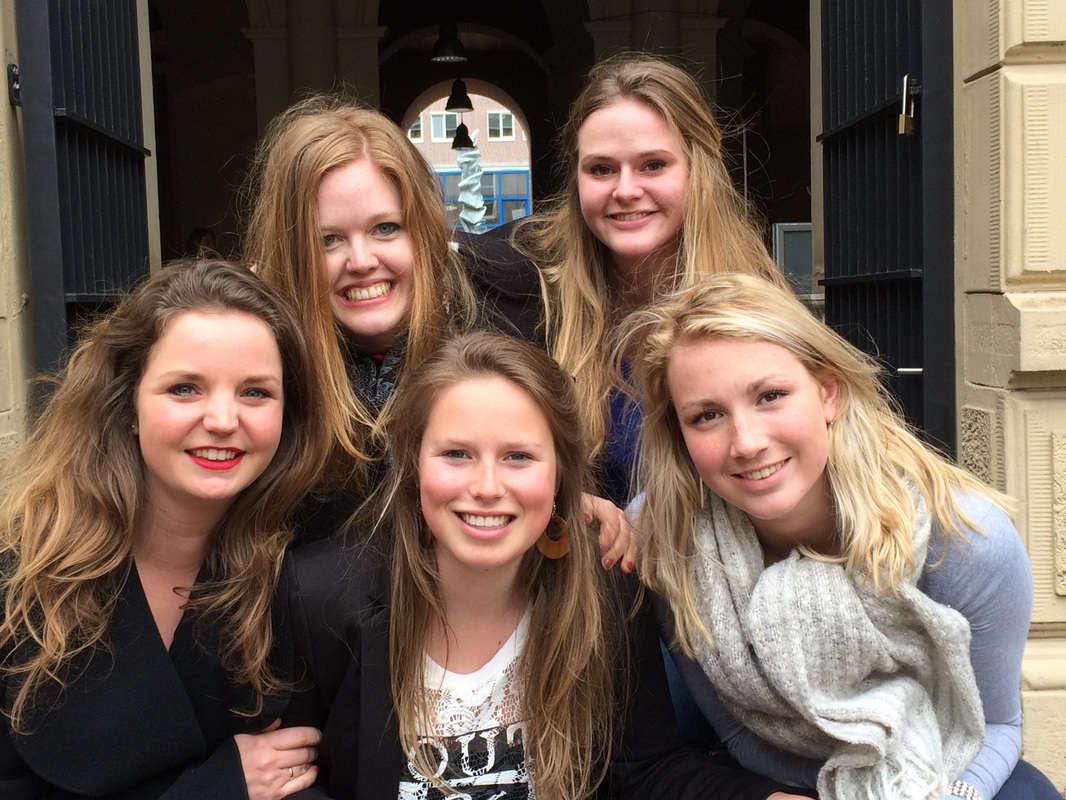
- Liesa de Haan (second picture) is the coordinator from the IRSP committee. Liesa is a third-year student with a great interest in NGO's and human rights. The researchers of this research are Machteld van Dijk, Karin Larson, Saskia Postema and Céline Martens
The researchers
- Karin Larson
- Machteld van Dijk
- Saskia Postema
- Céline Martens
Partner 2: Care Nederland
The partner
This year IRSP cooperated with CARE, an international non-profit organization with running projects in more than 80 countries. CARE is based on the vision that everybody can strive to a world of hope, tolerance and social justice. To make this happen, CARE has four main goals like, woman empowerment, emergency relief, entrepreneurship and disaster prevention. The research IRSP is conducting for CARE this year, focussed on the projects of CARE related to peace and disaster reaction.
The research
Care is an international lobby group with running projects in more than 80 countries. Its vision is for everybody to strive towards a world of hope, tolerance and social justice.
Since 2014, Care started an internal reorganisation. Two departments Peacebuilding and Disaster Risk Reaction have been combined to a new department called ‘Resilience’. The new department has finished a draft strategy, with the goal of making communities more resilient in fragile situations, caused by conflict or natural disaster. This is not based on emergency help, but via more structural manners of poverty reduction. The Resilience department set up three domains that need to change in order to be able to structurally make communities more resilient, namely social justice (including gender equality, good governance and sustainable livelihoods. Care wanted the IRSP to organise its experience, knowledge and skills and order them in these three domains of change.
Thereto, Care asked us to categorise running projects in the domains of change. Furthermore, Care is looking for indicators to measure its impact on the three domains, both on forehand and while evaluating.
The full research can be found in the pdf on the bottom of this page.
The Coordinators
One IRSP research is conducted by about four students. There are two people who coordinate them. Firstly, there is a Professor of the IRIO-department who watches over the academic quality of the research. As a researcher you will meet them on regular basis. Secondly, there is a representative of the IRSP Committee who is in contact with the respective partner and who controls that the partner’s wishes are met. Here you can see who will coordinate what research.
- Dr. Gerda van Roozendaal (picture) is the programme director graduate studies of the Master International Relations and holds many other positions. She is an expert in social aspects of trade policy, institutional development and regionalisation.
- Tessa Wapstra is a fourth year student of IRIO, with an interest in global governance. She coordinates this research in behalve of the IRSP board.
The researchers
- Agha Baymarov
- Monika Povilenaite
- Sannah Nagelkerken
- Michal Ovadek
Care Research 2014-2015
| File name | File size |
|---|---|
| care_digital.pdf | 3.3 MB |
Partner 3: The Dutch Ministry of Culture, Education and Science
The research
Recently, ambitions have been expressed by the Dutch Ministry of Education, Culture and Science (ECS), VH and VSNU to enhance both incoming and outgoing student mobility. In this context, the present research highlights the role of foreign missions, by addressing the main research question:
“To what extent are foreign missions expected to enhance student mobility between the Netherlands and Canada and China?”
The first chapters cover an analysis of the historical evolution of student mobility, an overview of the various policy goals on this matter by the Ministry of ECS, VH and VSNU and a brief note on the upcoming missions to Canada and from China. In order to provide a comprehensive overview of the various aspects involved, the sixth chapter comprises a SWOT analysis which draws on interviews with a wide range of actors. Findings highlight several strengths, weaknesses, opportunities and threats (SWOT) of foreign missions in enhancing student mobility. Key amongst these are the respective facts that the attendance of high-level officials opens up considerable possibilities in the subject-countries; the problematic lack of data on past foreign missions, meaning there is no systematic documentation on foreign missions; the increased willingness on both the side of Canada and China to cooperate with Dutch educational institutions; and internal competition between Dutch universities. Based on these, as well as as other research results, several recommendations are formulated, that can be distinguished between those that apply directly to foreign missions, and those that more generally apply to student mobility. Most importantly, it is held that the Ministry should record all data concerning both incoming and outgoing missions - including attendees, programme and intended effects - that research should be conducted on the needs and wants of domestic, as well as foreign educational institutions and that the organization of missions should be improved.
The coordinators
One IRSP research is conducted by four students. There are two people who coordinate them. Firstly, there is a Professor of the IRIO-department who watches over the academic quality of the research. As a researcher you will meet them on regular basis. Secondly, there is a representative of the IRSP Committee who is in contact with the respective partner and who controls that the partner’s wishes are met. Here you can see who will coordinate what research. Dr. Ir. Menno Kamminga will be the University’s coordinator for this research. Dr. Kamminga is a senior lecturer at the University of Groningen with much experience in research. From the IRSP committee, Linda Klunder was the coordinator until April 2015. Linda is a second year IRIO student who is very interested in research, who left to do an internship in the Dutch Embassy of Saudi Arabia. The last month of the research is observed by Karen.
The researchers
- Elisa Ahovuori
- Pavela Mitova
- Lise Weerden
- Alex Onaca
Sponsors and partners